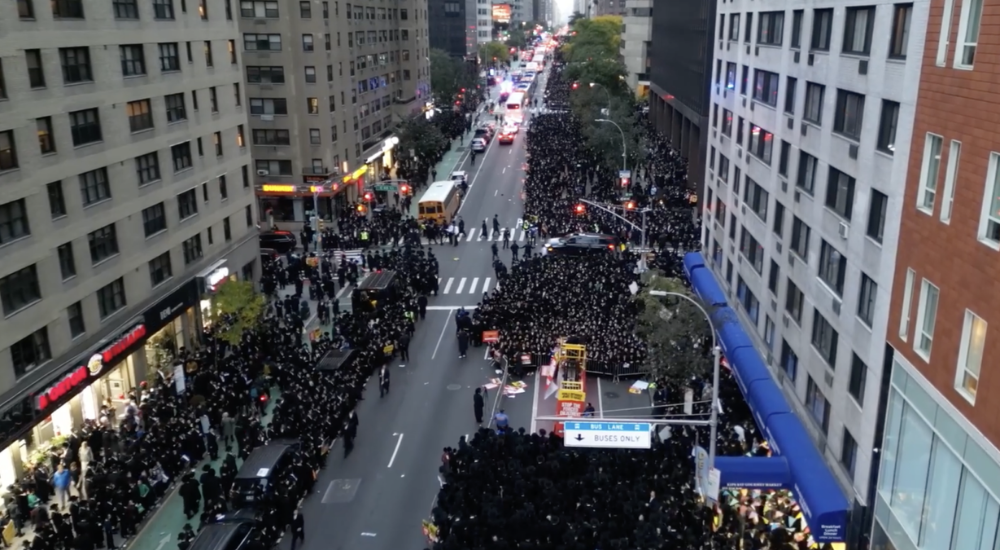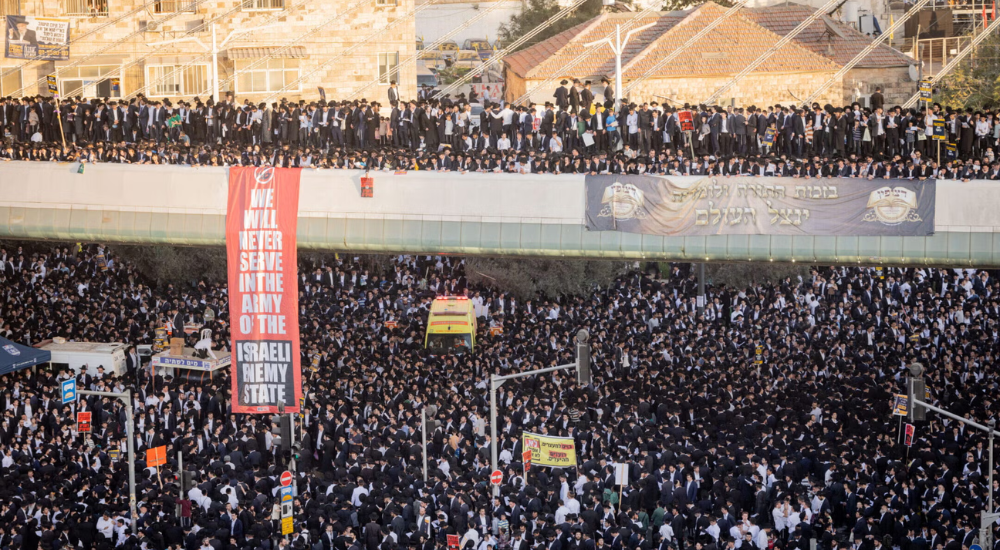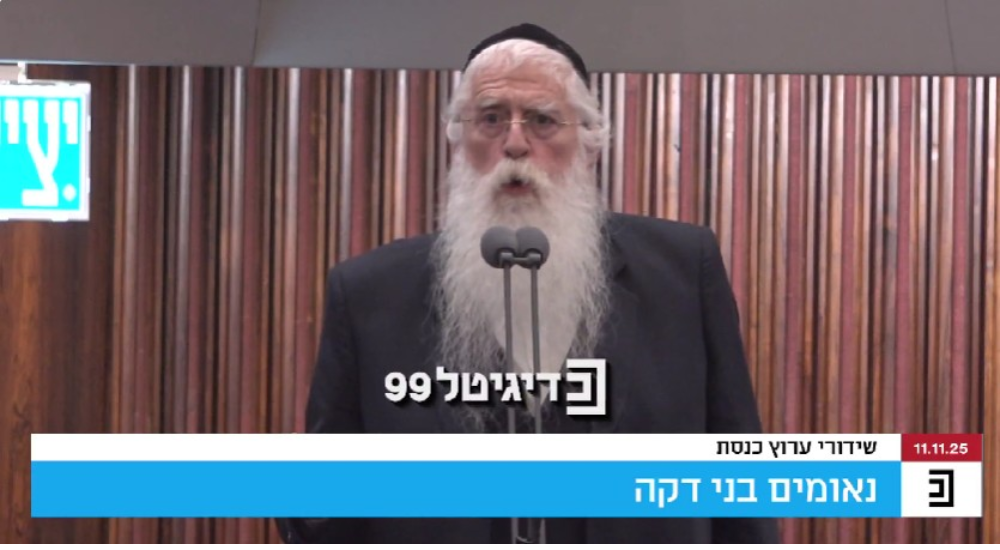
In a fiery and emotional public address that shook the religious world, veteran chareidi leader Meir Porush issued a powerful warning to Israeli lawmakers, declaring that the government’s recent actions against yeshiva students were nothing less than an assault on the Torah itself. Speaking at a mass gathering in Yerushalayim following the imprisonment of several bochurim who refused enlistment, Porush delivered one of his strongest speeches to date, accusing the authorities of “playing with fire” and endangering the foundations of Jewish identity.
His remarks came at a time of mounting tension between the religious community and the state, as the draft crisis continues to escalate and the debate over compulsory military service for yeshiva students intensifies.
A Speech That Echoed Through the Crowd
Standing before tens of thousands of protesters, Porush spoke with visible emotion, his voice rising as he condemned the government’s decision to jail yeshiva bochurim who insisted on continuing their Torah studies. The crowd, already energized by the day’s events, erupted in chants and applause as he delivered his now-viral statement:
“You’re playing with fire! The Torah itself is in prison!”
His words were a direct reference to the belief deeply rooted in chareidi ideology: that yeshiva students, through continuous Torah learning, serve as spiritual protectors of the nation. To punish them, Porush argued, is not merely a legal dispute—it is a spiritual danger.
“If They Jail a Bochur, They Jail the Torah”
Porush elaborated on his central claim: that imprisoning Torah students damages the very soul of the Jewish nation. According to him, the injustice lies not only in criminalizing religious observance but in violating a sacred heritage upheld for thousands of years.
He warned that the government’s push toward forced conscription reflects a misunderstanding of the chareidi community’s values:
- Yeshiva students are not draft evaders—they are Torah guardians.
- Prison is not a place for those who dedicate their lives to spirituality.
- The state must recognize that Torah learning is a national treasure, not a threat.
Porush accused lawmakers of crossing a red line by turning a religious disagreement into criminal punishment. “When you arrest a bochur,” he said, “you place handcuffs on the Torah itself.”
Growing Anger Over Yeshiva Student Imprisonment
The speech followed the controversial arrest and jailing of multiple yeshiva students who refused to appear at IDF enlistment centers. These imprisonments sparked intense outrage, with rabbinic leaders, roshei yeshiva, and political figures condemning the government’s actions.
For many, the arrests symbolized a dramatic shift in the state’s approach toward the ultra-Orthodox community—one that prioritizes enforcement over dialogue.
Community activists say the consequences of such measures could be severe:
- Deepened polarization between religious and secular sectors
- Increased civil unrest
- Loss of trust in state institutions
- Stronger resistance from yeshiva leaders
Porush’s warning—“you’re playing with fire”—was interpreted by many as urging the government to reconsider before allowing the conflict to spiral further.
The Larger Draft Crisis: A Nation at a Crossroads
Israel’s ongoing struggle to balance national security needs with religious autonomy lies at the heart of the controversy. As regional tensions increase, calls for universal military service have grown louder. On the other hand, the chareidi community maintains that Torah learning is equally vital to national survival.
This clash of worldviews has made the draft crisis one of the most divisive issues in modern Israeli society.
Political observers note that:
- The government is under pressure to reform the draft law.
- The Supreme Court has repeatedly challenged the exemption system.
- Coalition partners depend heavily on chareidi support.
- Religious parties see the preservation of yeshiva exemptions as non-negotiable.
Porush’s speech served as a dramatic reminder of just how explosive the issue has become.
Emotional Response From the Crowd
As Porush spoke, the massive gathering responded with waves of intensity. Many participants held signs reading:
- “Free the yeshiva prisoners!”
- “Torah is our life!”
- “Stop persecuting bochurim!”
Chants of “Shiluach!” and “Geulah!” echoed through the streets as Porush demanded that the imprisoned students be released immediately and that the government halt all punitive actions against yeshiva institutions.
For many in attendance, the speech articulated the frustration, fear, and determination they have felt for months.
Rabbinic Leaders Stand Behind Porush
Major rabbinic authorities quickly expressed support for Porush’s words. Several roshei yeshiva issued statements reinforcing the idea that Torah learning is not a political privilege—it is a spiritual obligation that cannot be interrupted by state legislation.
One prominent rav stated:
“No jail cell can contain the Torah. But jailing those who learn it is a chillul Hashem, a desecration of all we hold sacred.”
Their support has only amplified pressure on the government to reconsider its approach.
What Comes Next?
Porush’s bold declaration may be a turning point in the ongoing draft debate. His speech has ignited fresh public discussion, strengthened chareidi political unity, and intensified pressure on lawmakers.
In the coming weeks, key questions loom:
- Will the government soften its stance on yeshiva conscription?
- Will additional arrests lead to even larger protests?
- Can a compromise be reached—or is a full political showdown inevitable?
What remains clear is that Porush’s cry—“The Torah itself is in prison!”—has resonated deeply. It encapsulates the pain of a community that feels threatened, misunderstood, and determined to protect its most precious institution.